

TMS in Denver: Understanding iTBS, ONE-D, SAINT, and Deep TMS
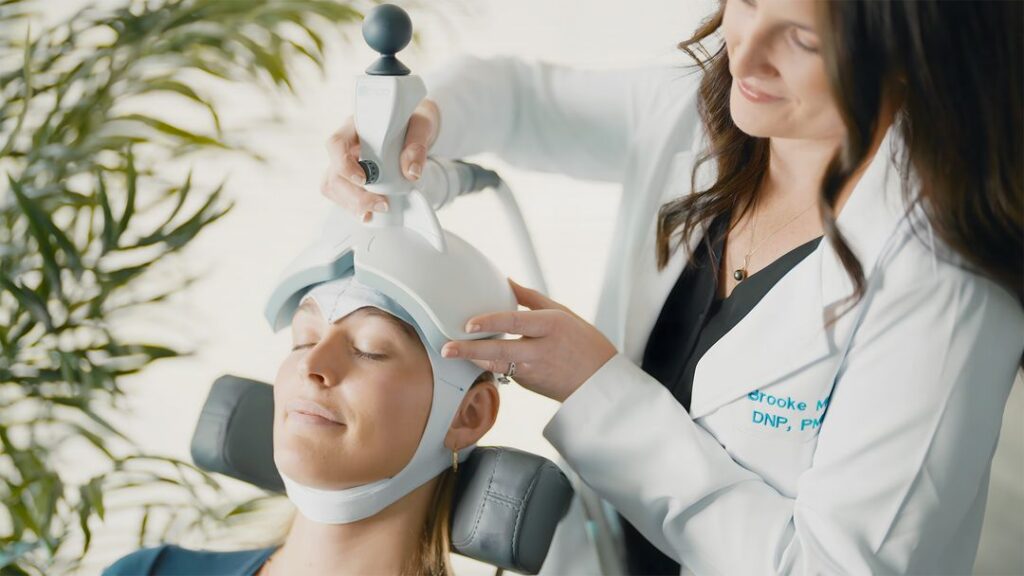
If you have been researching TMS in Denver, you have probably noticed that not all TMS treatments are the same.
You may have seen terms like TMS, rTMS, iTBS, Deep TMS, SAINT, accelerated TMS, and ONE-D. It can be difficult to understand what these terms actually mean—and even harder to figure out which option may be appropriate for you.
At Peak Interactive Wellness, we believe treatment decisions should be made with you, not for you. That means understanding your options, knowing what the research actually says, and choosing a treatment approach that fits your needs and your life.
TMS has also changed significantly since it was first introduced. Traditional TMS can involve daily appointments for several weeks, while newer approaches such as intermittent theta-burst stimulation (iTBS) can dramatically shorten individual treatment sessions. Accelerated approaches, including ONE-D and SAINT, compress multiple treatments into a much shorter timeframe.
At Peak Interactive Wellness in Denver, we offer both insurance-based daily iTBS TMS and an accelerated one-day TMS option using the Ampa One system. Ampa One has been described as the “Apple” of TMS.
Here is how they differ.
What is TMS?
Transcranial magnetic stimulation (TMS) is a non-invasive treatment that uses magnetic pulses to stimulate specific areas of the brain.
Unlike medication, TMS does not require a medication to circulate throughout your body. Instead, a magnetic coil is positioned against the scalp and delivers focused magnetic pulses to targeted areas of the brain involved in mood regulation.
TMS is performed while you are awake. It does not require anesthesia, and patients can generally return to their normal activities afterward.
The FDA established the regulatory pathway for repetitive TMS systems for the treatment of major depressive disorder, and multiple TMS systems have subsequently received FDA clearance for specific indications and protocols.
What is TMS FDA-cleared to treat?
This is an important distinction because you will find many websites advertising TMS for a wide range of conditions.
The specific FDA clearance depends on the device and protocol being used.
TMS devices have FDA clearance for conditions including:
- Major depressive disorder (MDD)
- Treatment-resistant depression
- Obsessive-compulsive disorder (OCD) for certain Deep TMS systems
- Smoking cessation for certain TMS systems
There are also TMS protocols being studied or used clinically for other conditions, but “TMS can be used for” and “FDA-cleared for” are not the same thing.
At Peak Interactive Wellness, our TMS program is focused on evidence-based treatment for depression, with candidacy determined through an individual psychiatric evaluation.
Traditional TMS vs. iTBS
One of the biggest changes in TMS treatment has been the development of theta-burst stimulation.
Traditional TMS
Traditional high-frequency TMS typically delivers stimulation over a longer period of time and is commonly scheduled five days per week for several weeks.
That schedule can work well for some people—but committing to dozens of appointments can be difficult.
Work. Childcare. Transportation. School. Travel. Life.
Sometimes the treatment schedule itself becomes a barrier to receiving treatment.
iTBS: intermittent theta-burst stimulation
iTBS stands for intermittent theta-burst stimulation.
It is a form of TMS that delivers magnetic pulses in a specific pattern designed to produce therapeutic stimulation in a much shorter session.
The FDA has cleared iTBS protocols for major depressive disorder on appropriate TMS systems. FDA documentation describes iTBS as an established treatment protocol for MDD.
And this is where things get particularly interesting for our patients.
Our insurance-based TMS sessions are only about 3 minutes long.
At Peak Interactive Wellness, we use the Ampa One system to deliver iTBS.
An individual iTBS stimulation session takes approximately 3 minutes.
That does not mean the entire course of treatment takes three minutes. With insurance-based TMS, patients still typically attend treatment regularly over a series of weeks.
But instead of sitting in the TMS chair for 20–40 minutes for each stimulation session, the actual iTBS stimulation is remarkably brief.
The Ampa One system received FDA clearance for treatment of major depressive disorder in adults who have not achieved satisfactory improvement with prior antidepressant treatment during the current episode.
What is Deep TMS?
Deep TMS is another form of transcranial magnetic stimulation.
The biggest difference is the way the magnetic field is generated and shaped.
Traditional figure-eight-style TMS coils primarily target more superficial cortical regions. Deep TMS systems use specialized coils designed to stimulate broader and deeper brain regions.
One well-known example is the BrainsWay Deep TMS system.
Deep TMS has FDA clearance for specific indications, including major depressive disorder, and certain Deep TMS systems have also received clearance for OCD. The exact FDA indication depends on the device and protocol.
Deep TMS is therefore not simply “better TMS” or “stronger TMS.”
It is a different technology with a different coil design, targeting approach, and FDA-cleared indications.
At Peak Interactive Wellness, we use the Ampa One system rather than a BrainsWay Deep TMS system. The Ampa One platform includes different coil configurations, including an L-coil for more focal stimulation and an M-coil configuration designed for broader/deeper stimulation. FDA documentation describes these different coil configurations and their intended stimulation areas.
What is SAINT TMS?
You may also come across SAINT, which stands for Stanford Accelerated Intelligent Neuromodulation Therapy.
SAINT is an accelerated form of iTBS that was developed through research at Stanford.
Rather than receiving one treatment per day for several weeks, the FDA-cleared SAINT protocol delivers:
- 10 iTBS sessions per day
- Over 5 consecutive days
- With approximately 50 minutes between sessions
- Using 1,800 pulses per session
- With individualized targeting using MRI-based functional connectivity and neuronavigation
That makes SAINT dramatically different from traditional daily TMS.
Stanford describes SAINT as a treatment for treatment-resistant depression and reports that its accelerated approach can produce improvement much more quickly than conventional TMS schedules.
Is ONE-D the same thing as SAINT?
No.
They have an important similarity: both are accelerated iTBS approaches designed to deliver a high amount of stimulation in a compressed timeframe.
But they are not the same protocol.
SAINT uses its own FDA-cleared system and methodology, including MRI-guided functional targeting and a five-day treatment schedule. ONE-D is a different accelerated approach designed to compress treatment into one day.
What is ONE-D TMS?
ONE-D stands for Optimized, Neuroplasticity-Enhanced techniques in Depression.
It is one of the newest accelerated TMS approaches and is designed to deliver a course of iTBS in a single day.
The ONE-D approach uses multiple brief iTBS sessions spaced throughout the day. The published research on the protocol has included neuroplasticity-enhancing medication in conjunction with TMS.
This is an important place to slow down and be precise.
The Ampa One device is FDA-cleared. The ONE-D protocol itself is not FDA-cleared.
The FDA has cleared the Ampa One TMS system for its indicated use in depression. However, the Clinical TMS Society has specifically noted that the ONE-D protocol itself has not received FDA clearance and that the evidence supporting the protocol remains preliminary.
We think patients deserve to know that distinction.
Emerging treatments can be exciting without overstating what we know.
The early ONE-D research is promising, but it is based on relatively small studies and requires more rigorous research to establish how it compares with established TMS treatment approaches.
So how are these TMS treatments different?
Here is a simplified way to think about them:
| TMS approach | Typical schedule | What makes it different? |
|---|---|---|
| Traditional TMS | Daily treatments over several weeks | Established, conventional TMS treatment schedule |
| iTBS | Typically daily treatments over several weeks | Uses theta-burst stimulation to make each stimulation session much shorter |
| Deep TMS | Typically daily treatments over several weeks | Uses specialized coil technology designed to stimulate deeper/broader brain regions |
| SAINT | 10 sessions/day for 5 days | Accelerated iTBS with MRI-guided individualized targeting |
| ONE-D | Multiple sessions in one day | Accelerated iTBS designed to compress treatment into a single day |
The important takeaway?
There isn’t just one type of TMS anymore.
Technology, stimulation patterns, targeting, and treatment schedules can all be different.
TMS at Peak Interactive Wellness in Denver
At Peak Interactive Wellness, we offer two primary pathways for patients interested in TMS.
Option 1: Insurance-Based Daily iTBS
For eligible patients with Aetna, Blue Cross Blue Shield (BCBS), Cigna, or United Healthcare, we offer insurance-based TMS using iTBS with the Ampa One system.
The treatment is delivered in person at our Denver office.
Because we use iTBS, the actual stimulation portion of each session is approximately 3 minutes.
Treatment still occurs regularly over a course of care, but the short stimulation time can make TMS much easier to fit into a busy schedule.
Insurance coverage and authorization requirements vary by plan, so our team verifies benefits and eligibility before treatment begins. The self-pay price for this protocol is $3000.
Option 2: ONE-D TMS
For patients who want an accelerated treatment option and are appropriate candidates, we also offer a cash-pay one-day TMS program using the Ampa One system.
Instead of returning to the office day after day for several weeks, multiple brief iTBS sessions are delivered throughout a structured treatment day, with breaks between sessions.
One day instead of weeks of appointments.
This can be particularly appealing for people who:
- Cannot take several weeks away from work
- Have significant childcare or scheduling limitations
- Travel for work
- Live outside the immediate Denver area
- Prefer a highly concentrated treatment experience
- Have previously considered TMS but could not make the traditional schedule work
Our one-day program is self-pay, and we currently offer a $3,000 self-pay discount for this treatment option.
Because accelerated TMS is not appropriate for everyone, we start with an individualized evaluation to determine whether it makes clinical sense for you.
Why We Offer More Than One TMS Option
At Peak Interactive Wellness, we don’t believe in a one-size-fits-all approach to psychiatric care.
Some patients want the insurance-based route and/or prefer a conventional course of iTBS.
Others have tried multiple treatments and are looking for an accelerated option that fits their life.
And some people simply cannot realistically commit to coming into the office five days a week for several weeks.
Having both options allows us to have a more meaningful conversation:
What treatment makes sense for you?
Not:
What treatment do we happen to offer?
That’s an important distinction.
What Does TMS Feel Like?
TMS does not put you to sleep and does not involve anesthesia.
During treatment, you remain awake and alert.
With iTBS, you will feel a series of magnetic pulses delivered through the coil. Patients often describe the sensation as tapping or clicking against the scalp.
Some people experience scalp discomfort or a mild headache, particularly early in treatment. Your clinician will review the potential risks, benefits, contraindications, and safety considerations with you before treatment.
TMS is different from ECT (electroconvulsive therapy). TMS does not involve an electrical current being passed through the body and does not require anesthesia.
Is TMS Right for You?
TMS can be an important option for people with depression who have not gotten enough relief from medication.
But it isn’t the right treatment for everyone.
Before starting TMS, we look at your psychiatric history, previous treatment response, medications, medical history, and individual risk factors. We also consider which TMS approach makes the most sense based on your goals and circumstances.
And sometimes the answer is that another treatment is a better fit.
That’s okay.
Our goal isn’t to put everyone through TMS.
Our goal is to help you find the treatment that makes sense for your whole story.
TMS in Denver at Peak Interactive Wellness
If you’re searching for TMS in Denver, iTBS in Denver, accelerated TMS, or one-day TMS, Peak Interactive Wellness offers both insurance-based and self-pay options.
Our Denver practice is located at 3455 Ringsby Court, Suite 140, Denver, Colorado, where we provide psychiatric care and interventional treatment in a collaborative, patient-centered environment.
We offer:
- Insurance-based daily iTBS
- Aetna, BCBS, Cigna, and United insurance options
- Approximately 3-minute iTBS stimulation sessions
- Ampa One TMS technology
- One-day accelerated TMS
- Self-pay one-day TMS with a $3,000 discount
- Psychiatric evaluation and ongoing medication management
- An integrated approach that considers medication, therapy, lifestyle, and other treatment options alongside TMS
- Spravato
- Ketamine-Assisted Psychotherapy (KAP)
- Therapy
TMS doesn’t have to be a decision you make alone.
If you’re wondering whether traditional iTBS, accelerated one-day TMS, or another treatment approach makes sense for you, our team can help you understand the options and determine what fits your needs.
Ready to explore TMS in Denver? Request an appointment with Peak Interactive Wellness to start the conversation.
